Pileus Technologies: Blog
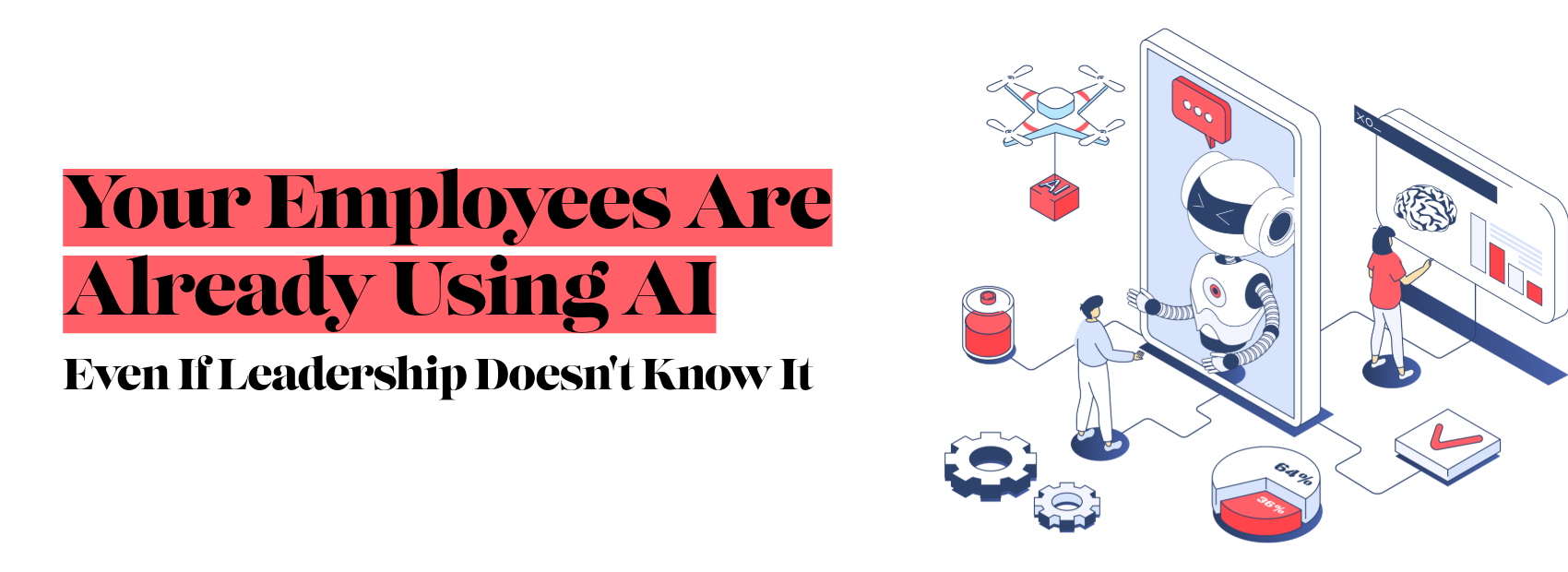
Your Employees Are Already Using AI, Even If Leadership Doesn’t Know It
Shadow AI risks are becoming one of the fastest-growing concerns for small and medium-sized businesses. While executives continue to evaluate artificial intelligence strategies, employees have already begun using AI tools across the workplace.
In many organizations, staff members are quietly using ChatGPT, Microsoft Copilot, Gemini, Claude, Grammarly AI, and dozens of browser-based AI tools daily. Unfortunately, most SMBs still lack governance policies, training standards, or visibility into how these tools are being used.
As a result, businesses face growing concerns involving:
- Data security
- Compliance exposure
- Intellectual property leakage
- Inaccurate business information
- Operational inconsistency
- Unapproved software adoption
This growing trend is often called “Shadow AI,” and it is quickly becoming the newest evolution of shadow technology inside organizations.
According to the National Institute of Standards and Technology (NIST), organizations should implement AI governance and risk management frameworks to reduce operational and cybersecurity exposure associated with the adoption of artificial intelligence. Businesses that fail to implement visibility and governance measures may expose themselves to unnecessary operational risk from unmanaged AI use. Organizations can learn more about AI risk management through the NIST AI Risk Management Framework.
Additionally, many organizations already struggle with shadow IT. Now, AI tools are accelerating the problem even further.
What Is Shadow AI?
Shadow AI refers to employees using artificial intelligence tools without formal approval, oversight, or governance from leadership, IT, compliance, or cybersecurity teams.
Simply put, employees adopt AI solutions independently because they want to work faster and more efficiently.
However, problems begin when organizations lose visibility into:
- Which AI tools do employees use
- What information employees upload
- How outputs are being used
- Whether data is protected
- Which vendors process company information
In many cases, employees do not realize they are creating risk.
For example, a staff member may paste:
- Customer records
- Contracts
- Financial information
- Protected health information
- Internal operational data
- Legal documents
- Proprietary company knowledge
into public AI systems without understanding where that data goes afterward.
As a result, SMBs may unintentionally create compliance violations, security exposure, and intellectual property concerns.
Shadow AI Is the New Shadow Tech Problem
Most IT professionals are already familiar with shadow IT. Employees have historically downloaded unauthorized software or cloud services without involving IT departments.
Examples included:
- Dropbox
- Google Drive
- Personal email
- Messaging apps
- File-sharing tools
- Project management platforms
Today, AI tools are creating a new generation of concerns about shadow technology.
Unlike traditional shadow IT, Shadow AI introduces additional risks involving:
- AI hallucinations
- Data retention
- Prompt history storage
- AI model training
- Deepfake generation
- Automated decision-making
- Regulatory uncertainty
Consequently, the business impact is much greater than that of simply using unapproved software.
Microsoft recommends organizations prioritize responsible AI governance, data security, and access management before widespread AI adoption. Businesses can review Microsoft’s Responsible AI guidance to better understand governance expectations.
Why Employees Turn to AI Without Approval
Most employees are not trying to create security problems. Instead, they are trying to solve productivity challenges.
Employees often adopt AI because they want to:
- Work faster
- Reduce repetitive tasks
- Improve communication
- Generate reports quickly
- Simplify research
- Create presentations faster
- Respond to customers more efficiently
Unfortunately, when organizations fail to provide guidance, employees begin experimenting independently.
As a result, AI usage spreads informally across departments without oversight.
This creates operational inconsistency because every employee may use AI differently.
One employee may produce high-quality results safely. Meanwhile, another may accidentally expose sensitive company information through careless prompting.
Therefore, businesses must recognize that AI adoption is already happening, whether leadership formally approves it or not.
The Compliance Risks of Shadow AI
One of the biggest concerns surrounding Shadow AI risks involves compliance.
Many SMBs operate in regulated industries involving:
- HIPAA
- PCI-DSS
- SOC 2
- CMMC
- FTC Safeguards Rule
- Financial reporting requirements
Unfortunately, public AI tools may not align with those compliance obligations.
For example, employees may unknowingly submit:
- Protected health information
- Financial account data
- Client records
- Personally identifiable information
- Legal agreements
into systems that store prompts externally.
Consequently, organizations may violate internal policies or regulatory requirements without realizing it.
Additionally, AI-generated content itself may create risks involving:
- Accuracy
- Bias
- Misinformation
- Copyright concerns
- Improper disclosures
Therefore, SMBs should establish clear AI governance standards before operational usage expands further.
The Cybersecurity and Infrastructure Security Agency (CISA) recommends that organizations establish governance policies and visibility into emerging AI usage to reduce operational risk and cybersecurity exposure. Additional guidance is available through CISA’s AI Security resources.
AI Hallucinations Can Damage Business Operations
Another major concern tied to Shadow AI risks is inaccurate output.
AI systems sometimes confidently generate incorrect information. This issue is commonly known as an AI hallucination.
Examples include:
- Incorrect financial summaries
- Fake citations
- Inaccurate legal language
- Wrong technical instructions
- False customer information
- Misleading compliance guidance
Unfortunately, employees may trust AI-generated content too quickly.
As a result, inaccurate information can spread into:
- Customer communications
- Internal reporting
- Contracts
- Documentation
- Marketing materials
- Executive presentations
This becomes especially dangerous when businesses lack review procedures.
Therefore, organizations should train employees to treat AI as an assistant rather than a replacement for human expertise.
SMB Departments Most Likely Using Shadow AI
Shadow AI adoption is occurring across nearly every business department.
Sales Teams
Sales professionals use AI for:
- Prospect emails
- Follow-ups
- Proposal writing
- Account research
- Meeting summaries
Marketing Departments
Marketing teams frequently use AI for:
- Blogs
- Social media
- SEO content
- Ad copy
- Campaign ideas
- Webinar promotion
Human Resources
HR departments may use AI for:
- Job descriptions
- Employee communication
- Policy summaries
- Onboarding content
However, HR carries significant privacy and compliance responsibilities.
Finance Teams
Finance departments increasingly use AI for:
- Reporting summaries
- Forecasting
- Spreadsheet analysis
- Budget communication
IT and Operations
Technical teams often use AI for:
- Documentation
- Scripting
- SOP creation
- Ticket summaries
- Workflow automation
Consequently, AI governance must become an organization-wide initiative rather than just an IT discussion.
How SMBs Can Reduce Shadow AI Risks
Organizations should not respond to Shadow AI by banning AI entirely. That approach usually fails because employees will continue using AI privately.
Instead, businesses should develop safe, structured adoption strategies.
Effective AI Governance Strategies Include:
Develop an AI Usage Policy
Employees need clear guidance involving:
- Approved platforms
- Restricted data
- Acceptable usage
- Compliance boundaries
- Security expectations
Create Approved AI Tools Lists
Organizations should standardize which AI platforms employees can use safely.
Train Employees on Prompt Security
Employees should understand:
- What not to upload
- How prompts are stored
- How AI vendors process information
- Why sensitive data matters
Monitor Shadow Technology Usage
Visibility tools can help organizations identify:
- Unauthorized AI applications
- Browser extensions
- Risky integrations
- Unapproved SaaS platforms
Build Department-Specific AI Workflows
Structured workflows improve:
- Consistency
- Security
- Productivity
- Compliance alignment
As a result, employees still gain productivity benefits without creating unnecessary exposure.
AI Governance Will Become a Business Requirement
Many SMBs still view AI as an optional productivity tool. However, artificial intelligence is quickly becoming embedded into:
- Microsoft 365
- CRM platforms
- Help desk systems
- Accounting software
- HR platforms
- Marketing automation
- Collaboration tools
Consequently, AI governance will soon become as important as cybersecurity policies and compliance standards.
Organizations that delay governance may struggle later with:
- Compliance audits
- Data security concerns
- Vendor risk management
- Cyber insurance requirements
- Operational inconsistency
Meanwhile, businesses that establish structured AI programs early will gain operational and competitive advantages.
Final Thoughts on Shadow AI Risks for SMBs
Shadow AI risks are already affecting small and medium-sized businesses across every industry. Employees are adopting artificial intelligence tools faster than most organizations can govern them.
However, banning AI is not the answer.
Instead, SMBs should focus on:
- Visibility
- Governance
- Employee education
- Approved AI platforms
- Secure prompting
- Compliance alignment
Most importantly, leadership teams must recognize that AI adoption is no longer theoretical. It is already happening throughout the organization.
The businesses that succeed will not necessarily be the companies using the most AI tools. Instead, success will belong to the organizations using AI strategically, securely, and responsibly.
Want to identify Shadow AI risks inside your organization?
Start with:
- An AI usage assessment
- AI governance workshops
- Secure prompting training
- AI policy development
- Shadow technology discovery reviews
The sooner your business gains visibility into AI usage, the safer and more productive your organization will become.